

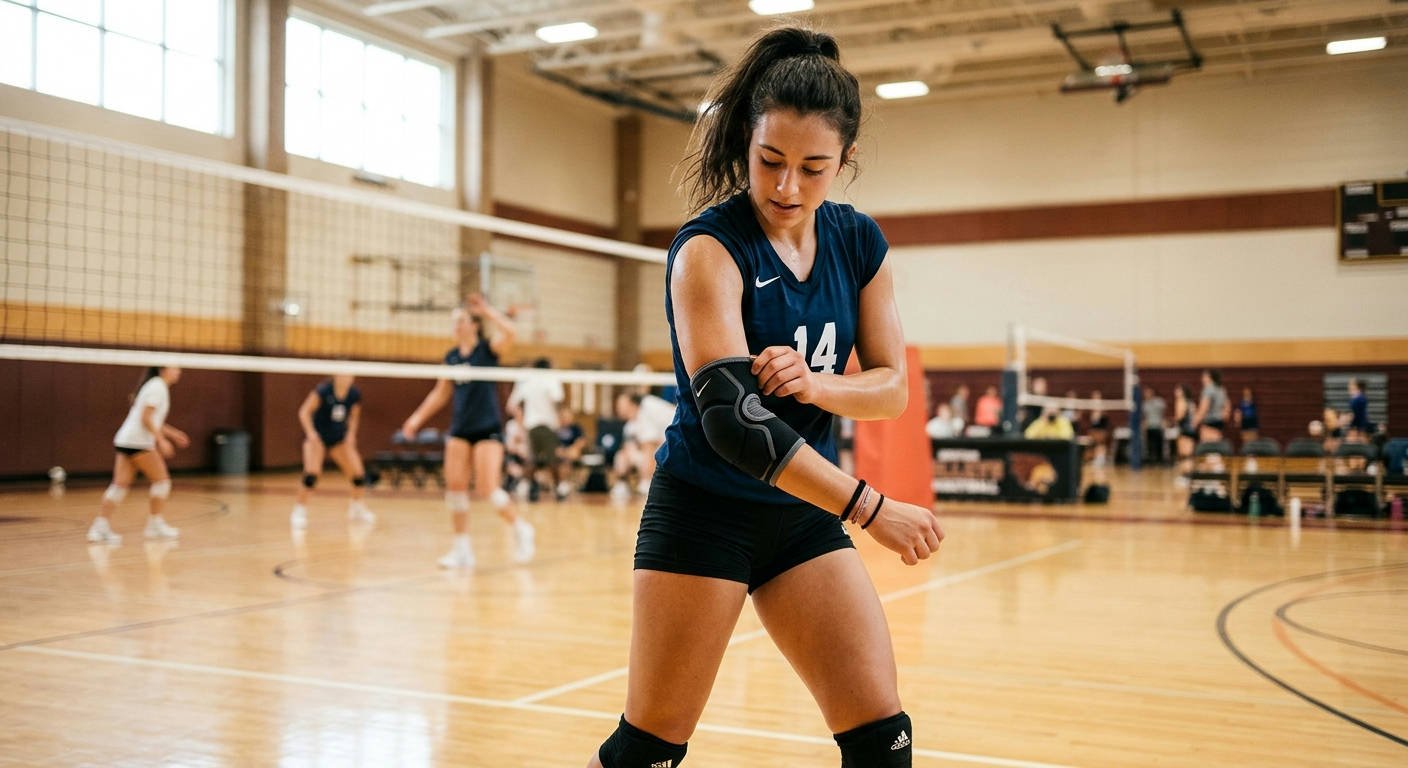
Let's get one thing straight: diving for a pancake save feels incredible, but the floor burn that follows does not. If you're tired of scraping up your arms, it's time to master the essentials of your gear. Knowing exactly how to wear volleyball elbow pads is about more than just avoiding a little skin irritation; it’s about protecting your joints, boosting your confidence, and playing a fiercer, more aggressive game. This isn't just a suggestion—it's a critical skill for any serious player.
Why Your Elbows Deserve the Attention
You protect your knees without a second thought, but your elbows often get overlooked. That’s a rookie mistake. They’re your first point of contact on dives and sprawling defensive plays, and giving them proper protection is non-negotiable for longevity in this sport.
Beyond the Obvious: Preventing Abrasions
The most immediate benefit is preventing floor burn. Gym floors, whether polished hardwood or synthetic surfaces, are notoriously unforgiving. A solid dive can leave you with a painful, raw abrasion that stings for days, gets infected, and can even take you out of practice. Properly fitted elbow pads create a crucial barrier, letting you slide without shredding your skin.
The Confidence Boost of Protective Gear
There's a psychological edge that comes with feeling protected. When you aren't subconsciously worried about the impact or the sting of hitting the floor, you play with more freedom. You'll commit fully to that diving save instead of hesitating for a split second. That hesitation is often the difference between a point for your team and a point for the opponent.
Reducing Impact on Joints for Long-Term Health
Every dive sends a shockwave through your arm. While a single impact might seem minor, the cumulative effect over thousands of reps in a season can lead to long-term joint issues. The padding absorbs a significant portion of that shock, protecting the delicate olecranon process—the bony point of your elbow—and the surrounding ligaments. Think of it as an investment in your future on the court.
Choosing Your Perfect Pair: Not All Pads Are Created Equal
Walking into a sporting goods store or browsing online reveals a dizzying array of options. Don’t just grab the first pair you see. The right choice depends on your body, your position, and your play style.
Sizing is Everything: The Measurement Guide
This is the most critical step. A pad that’s too loose will slide down your arm mid-rally, offering zero protection when you need it. One that’s too tight will cut off circulation, restrict movement, and become an unbearable distraction.
- Measure Up: Grab a soft measuring tape.
- Find Your Point: Extend your arm and measure the circumference around the widest point of your elbow.
- Consult the Chart: Match your measurement to the manufacturer's sizing chart. If you're between sizes, the 2026 standard advice is to size down for a snug, compression-style fit, as most materials will stretch slightly over time.
Material Matters: Breathability vs. Durability
The fabric of the sleeve makes a huge difference in comfort. Modern pads use advanced blends that balance key features. Look for materials with moisture-wicking properties, like combinations of spandex, nylon, and polyester, to pull sweat away from your skin and keep you cooler during intense matches. Some premium pads even feature ventilated mesh panels on the inner elbow for maximum airflow.
Sleeve vs. Strap: Picking Your Style
Most modern volleyball elbow pads are sleeve-style. They slide on and rely on compression to stay in place. This design is streamlined and less likely to snag on the net or another player. Older, bulkier styles sometimes used straps, but these are largely phased out in competitive play for being cumbersome. Stick with the sleeve.
"The best piece of gear is the one you forget you're wearing. If you're constantly adjusting your elbow pad, it's not the right fit, and it's taking your head out of the game." – Coach Davies, 15-year Collegiate Coaching Veteran
The Step-by-Step Guide on ## How to Wear Volleyball Elbow Pads
Putting on your pads might seem simple, but a few small details can make a world of difference in performance and comfort. Getting this right every single time builds a solid pre-game routine.
Step 1: Prep Your Skin
Start with clean, dry skin. Avoid applying any lotions or oils to your arms before putting on your pads, as they can cause the material to slip and break down the elastic fibers over time. Ensure your arm is completely dry to prevent chafing.
### How to Wear Volleyball Elbow Pads for Maximum Protection
This is the core of the technique. Simply sliding the sleeve on isn't enough; placement is everything.
- Slide On: Bunch the sleeve up like a sock and slide it over your hand and up your forearm.
- Target the Joint: The goal is to center the thickest part of the padding directly over the bony point of your elbow. You should be able to feel it settle perfectly into place.
- Smooth It Out: Once positioned, smooth the sleeve material up your bicep and down your forearm to ensure there are no wrinkles or bunches. The fit should be snug and uniform from top to bottom.

Step 3: The Flex Test – Ensuring Full Range of Motion
A properly worn pad should feel like a second skin, not a cast. After you put it on, test your arm's mobility.
- Fully extend and bend your arm several times.
- Mimic your passing and hitting motions.
- Do a few quick arm swings.
The pad should move with you without shifting out of place or pinching your skin. If you feel any restriction, it's either positioned incorrectly or the wrong size.
Common Mistakes and How to Wreck Them
Even experienced players can get it wrong. Spotting these common errors in your own routine can instantly improve your comfort and the effectiveness of your gear.
The "Too High" or "Too Low" Problem
This is the most frequent mistake. If the pad is sitting on your forearm, it won't protect your joint on impact. If it's pushed too far up your bicep, it will leave the crucial point of your elbow exposed. Always double-check that the padding is centered directly on the joint before you hit the court.
Wearing Them Inside Out (Yes, It Happens)
In a pre-game rush, it's surprisingly easy to put a pad on inside out. Most pads have seams and tags on the inside and a smooth, durable outer surface. An inside-out pad will feel uncomfortable and the padding won't be positioned effectively. Give it a quick look before you slide it on.
Ignoring the Compression Fit
Some players, fearing a tight fit, buy a size too large. This is a mistake. The compression element of the sleeve is what holds the pad securely in place during explosive movements. It should feel snug, but not painful. A loose pad is a useless pad. According to a 2025 study from the American College of Sports Medicine, properly fitted compression gear can also aid in muscle recovery.
Caring for Your Elbow Pads to Make Them Last
Your pads absorb a lot of sweat and grime. Leaving them to fester in your gym bag is a recipe for bacteria growth and a smell that could knock out your entire team. Proper care extends their life and keeps them hygienic.
The Right Way to Wash and Dry Your Gear
Never just toss them in with your regular laundry.
- Hand Wash Preferred: The best method is to hand wash them in a sink with cool water and a small amount of mild detergent.
- Machine Wash Safely: If you must use a machine, place the pads in a mesh laundry bag. Wash on a gentle cycle with cold water.
- Air Dry Always: Absolutely never put your elbow pads in the dryer. The high heat will destroy the elastic fibers and warp the foam padding. Lay them flat or hang them to air dry completely.
Spotting Wear and Tear: When to Replace Them
Even the best pads don't last forever. The 2026 season's new materials are more durable, but you still need to know when it's time for a new pair. Look for signs like packed-down padding that no longer feels cushioned, stretched-out elastic that doesn't stay in place, or any rips or tears in the fabric.
"Your gear is your armor. You wouldn't go into battle with a cracked shield. If your pads are worn out, you're not fully protected. It's that simple."
Advanced Techniques for Elite Players
For those playing at a high level, basic wear and care isn't always enough. You might need to adapt your gear strategy for specific situations.
How to Wear Volleyball Elbow Pads with Long Sleeves
If you wear a long-sleeved jersey or compression shirt, always put the elbow pad on first, directly against your skin. Then, pull your jersey sleeve down over it. This ensures the pad's compression grip works effectively. Wearing it over a sleeve creates a layer of fabric that will almost certainly cause the pad to slip out of place. This is a non-negotiable rule for performance.
Customizing Pads for a Perfect Fit
Some elite athletes will make minor modifications for a truly custom fit, though this should be done with care. This could involve adding a few stitches to tighten a slightly loose top band or even using specialized gear tape to add extra security during a crucial tournament. This is an advanced technique and isn't necessary for most players. For more on the life of a dedicated player, check out our Athlete Life section.
Gear is Part of Your Game-Day Identity
Your equipment isn't just functional; it's part of your uniform and your on-court presence. Learning how to wear volleyball elbow pads correctly ensures you are safe and can perform at your peak. It’s a simple but powerful way to take control of your game. You prepare your mind and your body for competition; preparing your gear is the final piece of that puzzle. Get it right, and you'll play with the confidence that you're protected, powerful, and ready for anything that comes over the net.
