

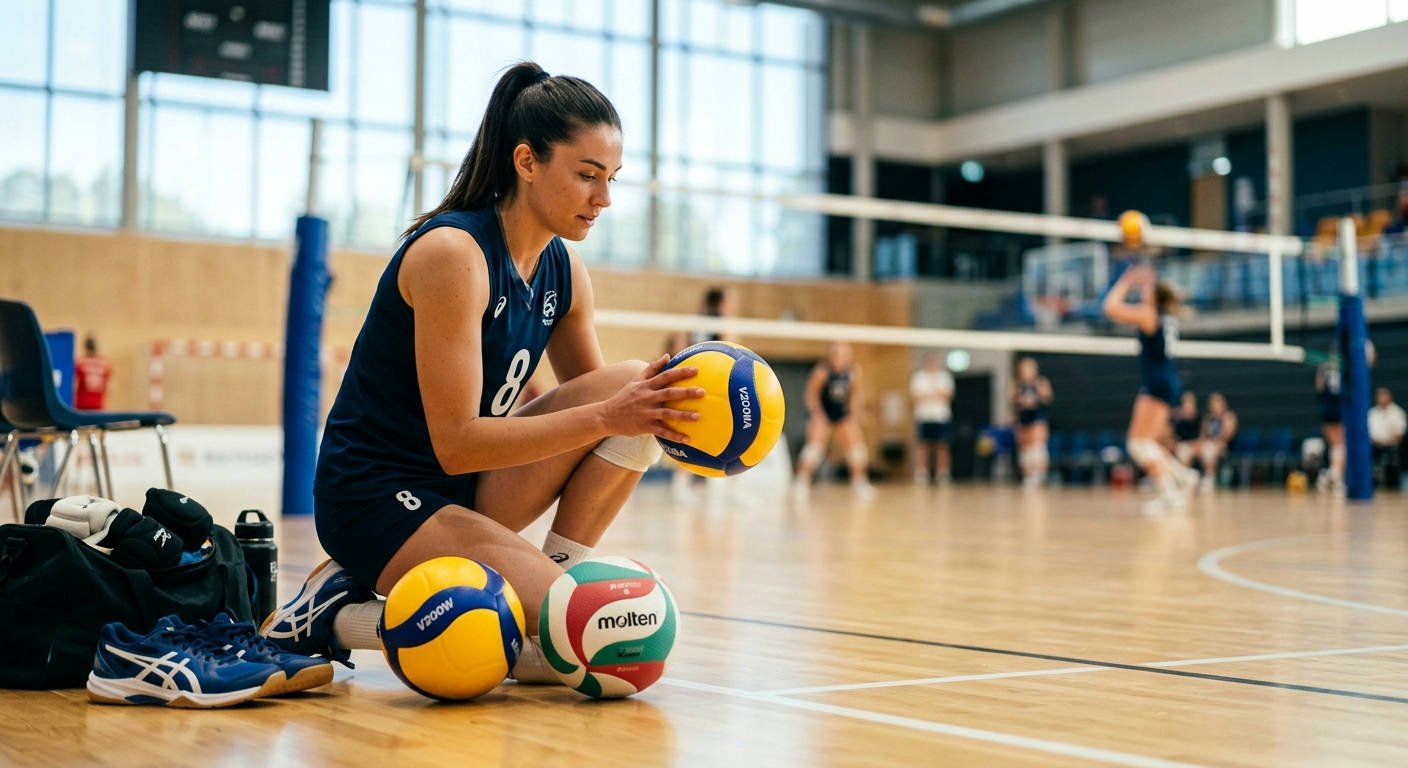
That volleyball isn't just a ball. It's the difference between a float serve that dies at the net and one that clips the tape for an ace. It’s the tool that separates a pancake dig from a shanked pass. Getting the right one is a critical piece of your performance puzzle. If you're serious about your game, then learning how to choose best indoor volleyball is your absolute first step to dominating the court.
First Things First: Official Specs vs. Your Needs
Before you even think about brands or colors, you need to understand the fundamental specifications. A ball that feels good in your hands might not even be legal for play in your league.
The Official FIVB & USA Volleyball Standard
The governing bodies of volleyball set strict rules for competition balls. According to organizations like the Fédération Internationale de Volleyball (FIVB), a standard indoor ball must meet specific criteria.
For most senior-level competitions in 2026, this means a ball that is:
- Circumference: 65-67 cm (25.5-26.5 in)
- Weight: 260-280 g (9.2-9.9 oz)
- Internal Pressure: 0.30-0.325 kgf/cm² (4.26-4.61 psi)
This is the benchmark. If you play in a competitive high school, club, or collegiate league, your game ball will fall squarely within these parameters.
Why "Official" Isn't Always Your Best Bet (Yet)
Don't rush to buy the official Olympic ball if you're just starting. For younger players or absolute beginners, those specs can be unforgiving. The weight and hardness can make practicing passing a painful experience, leading to bad habits as players pull away from the ball.
Many brands offer lighter "trainer" volleyballs or balls with a significantly softer cover. These are fantastic for learning proper form without the sting, building confidence from the ground up.
Deconstructing the Volleyball: Materials Matter Most
The stuff a volleyball is made of directly dictates its feel, durability, and price tag. What you see on the outside is just the beginning of the story.
Genuine Leather: The Pro's Choice
Genuine leather is the old-school classic, reserved for the highest levels of play. These balls offer an unparalleled feel and grip, but they come with a catch: a significant break-in period. Straight out of the box, they can feel stiff and slick.
It's only after hours of play that the leather softens and develops the perfect texture. They are the most expensive option and are not ideal for players who aren't practicing several times a week.
Synthetic/Composite Leather: The All-Around Champion
This is the sweet spot for 95% of players. Composite leather is a microfiber material designed to mimic the feel of real leather while offering enhanced durability and a softer touch right from the start.
It's the standard for most high school and collegiate programs. These balls are water-resistant, easier to clean, and provide a consistent feel without the lengthy break-in period. If you're unsure where to start, a high-quality composite ball is almost always the right answer.
Rubber: The Budget-Friendly Bruiser
Rubber volleyballs are built for one thing: survival. They are tough, cheap, and can withstand abuse on unforgiving surfaces. You’ll find them in P.E. classes and recreational centers.
While great for a casual game at a picnic, they lack the nuanced feel required for serious indoor volleyball. The hard, slick surface makes precise setting and controlled passing much more difficult. Leave these for the playground.
How to Choose Best Indoor Volleyball: A Construction Deep Dive
How a ball is put together is just as important as what it's made of. The panel design and assembly method drastically affect how the ball flies through the air and feels on your arms.
Understanding Panel Construction (18-Panel vs. 8-Panel Swirl)
For decades, the classic 18-panel, six-section design was the only game in town. It's a reliable, traditional construction that many players are used to.
However, modern volleyball engineering has shifted towards aerodynamic 8-panel or 10-panel "swirl" designs, like those seen in the Molten Flistatec or the Mikasa V200W. The theory is that this design stabilizes the ball's flight path, making serves more predictable and passes more accurate. Most major competitions in 2026 use a swirl panel design.
Stitched vs. Laminated/Molded
This one is simple. High-performance indoor volleyballs are almost exclusively laminated or thermally bonded. This process glues the panels directly onto the ball's inner core, creating a smoother, more uniform surface with no exposed seams.
Stitched balls, where you can see and feel the threading, are more common in budget or outdoor models. For the fast-paced indoor game, you want the seamless feel of a laminated ball.
The Bladder: The Unseen Heart of the Ball
The bladder is the inflatable core that gives the ball its life. Most quality volleyballs use a butyl rubber bladder. Its key feature is superior air retention. A cheaper ball might use a latex bladder, which loses air much more quickly. There's nothing more frustrating than a ball that goes soft halfway through practice. A good butyl bladder ensures your ball maintains the correct pressure for longer.
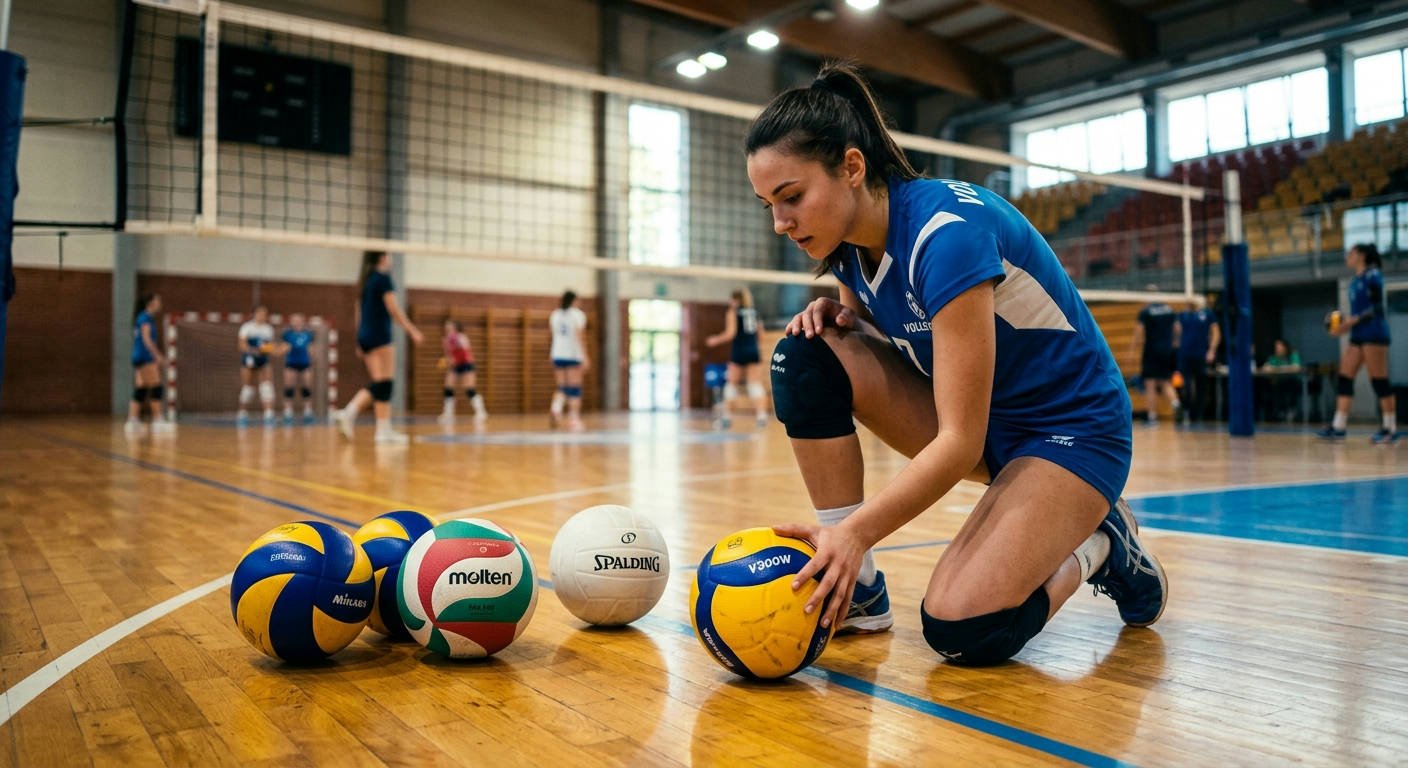
"The ball is the one piece of equipment everyone on the court has to touch. If it’s inconsistent, the whole game becomes inconsistent. It’s that simple." – Anonymous Collegiate Coach
The "Feel" Factor: It's More Than Just Squishy
Two balls can have identical specs on paper but feel completely different in reality. This subjective "feel" is crucial for player confidence, especially for setters and defensive specialists.
Soft Touch vs. Hard Touch
A "soft touch" ball generally has a thin layer of foam cushioning underneath the composite cover. This makes it more forgiving on the arms during serve receive and digging, which is a huge plus for long practices.
A "hard touch" ball provides more direct tactile feedback. Advanced players, particularly setters, sometimes prefer this as they can feel the ball on their fingertips more precisely, allowing for finer control over spin and location.
Grip and Texture: The Dimple Debate
Look closely at a top-tier volleyball. You'll likely notice it's not perfectly smooth. Many modern balls feature a dimpled, golf ball-like texture or a raised hexagonal grip pattern. This isn't just for show.
These micro-textures are designed to increase the surface area and wick away a tiny amount of sweat, improving a player's grip and control. For a setter executing a fast offense or a server trying to generate maximum spin, that extra bit of grip is a game-changer.
Matching the Ball to the Player
The perfect ball for a college libero is the wrong ball for a 12-year-old learning to serve. Here’s a quick guide to help you find the right match.
### How to Choose Best Indoor Volleyball for the Beginner
For someone just starting, the primary goal is to get as many positive touches as possible without pain or fear.
- Material: Go for a soft-touch composite leather.
- Weight: Consider a designated "lite" or "trainer" ball that is slightly lighter than the official spec.
- Pressure: Keep it on the lower end of the recommended PSI to increase softness.
- Focus: Durability and a forgiving feel.
For the Competitive Club or High School Athlete
At this level, consistency is everything. You need to be practicing with the same type of ball you'll use in your matches.
- Material: High-quality composite leather.
- Construction: Find out what ball your league or conference uses (e.g., Molten Flistatec 5000, Mikasa VQ2000) and get that exact model.
- Focus: Replicating game-day conditions. Your muscle memory depends on it.
For the Elite/Collegiate Player
You're already using the best of the best. Your choice is often made for you by your program or league.
- Material: Top-tier composite or genuine leather, depending on the conference standard.
- Construction: The official game ball of the NCAA, USA Volleyball, or FIVB.
- Focus: Owning several of the exact same model to ensure consistent practice reps.
The 2026 Volleyball Tech You Need to Know
The classic volleyball isn't going anywhere, but technology is starting to change how players train and interact with the ball itself.
Smart Volleyballs: The Data Revolution
The newest wave in training equipment for 2026 is the smart volleyball. These balls have nearly weightless sensors embedded inside that track metrics like spin rate, velocity, and impact consistency. The data syncs to a smartphone app, giving setters instant feedback on their release and hitters a clear measure of their power. While not yet legal for games, they are becoming an invaluable tool for elite training facilities.
Sustainable Materials and Eco-Friendly Options
Player and consumer demand has pushed manufacturers toward more responsible production. Look for top brands offering balls made with recycled synthetic materials and eco-friendly adhesives. These new-generation composites offer the same high performance while reducing the sport's environmental footprint, a major focus for many programs and athletes.
Caring for Your Investment
A great volleyball can cost a pretty penny. Don't ruin it through neglect. Proper care will keep your ball feeling responsive and game-ready for seasons to come.
"Details create the big picture. That applies to your form, your footwork, and yes, even the air pressure in your volleyball."
Proper Inflation is Non-Negotiable
Every volleyball has its recommended pressure (PSI) printed right on it. Get a small handheld pressure gauge and use it. An under-inflated ball feels mushy and unresponsive, while an over-inflated ball is like hitting a rock and can damage the seams. Always moisten the inflation needle before inserting it to protect the valve.
Cleaning and Storage
It's simple. After practice, wipe the ball down with a damp cloth to remove sweat and grime. Let it air dry. Store it at a stable, moderate room temperature. Leaving your ball in a hot car or a freezing garage will ruin the composite material and bladder over time.
Your Ball is Your Brand on the Court
The care you put into your equipment reflects the seriousness with which you take your sport. A clean, properly inflated ball is part of your professional toolkit. It signals to your teammates and coaches that you're prepared. This attention to detail is part of the complete athlete's mindset, which extends to every aspect of your on-court presence. You've dialed in your gear, now make sure your look is just as sharp with some killer Game Day Makeup Looks that won't quit.
Choosing the right indoor volleyball isn't about picking the most expensive one or the one with the coolest design. It’s about understanding the technology, materials, and construction, and matching them to your specific skill level and goals. It’s a piece of performance equipment. Treat it that way, and it will pay you back with every perfect pass, set, and kill. Now go get the right tool for the job.
